
Choosing the Right Check-In Setup for Your Event Size
A 50-person workshop and a 1,000-person conference need very different registration setups. Here is how to match your check-in to your crowd.
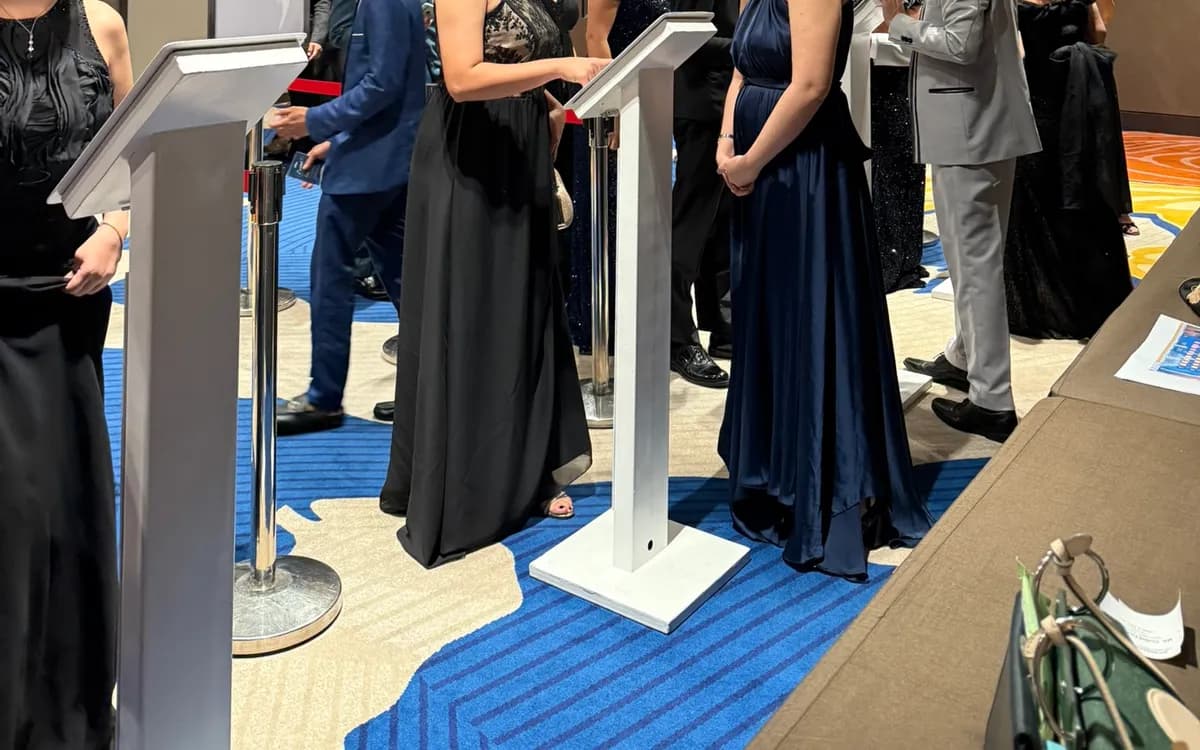
Not every event needs the same registration setup. A cozy 50-person workshop and a 1,000-person conference are different problems, and matching your check-in to the size and shape of your crowd is the difference between a calm entrance and a frustrating bottleneck.
Here is how to think about the right setup for events of different sizes.
The Number That Actually Matters
Before anything else, forget your total headcount for a moment and think about your arrival peak — how many people show up in your busiest fifteen minutes. This is what your registration desk has to survive.
A 300-person event where everyone arrives right before a 9:00 AM start is harder to serve than a 600-person expo with doors open all day. Plan your capacity for the peak, not the average, and you will rarely be caught out.
Small Events (Up to ~75 Guests)
For an intimate workshop, seminar, or internal gathering, one well-run check-in station is usually enough. A single iPad with your guest list lets a staff member find and check in each arrival in seconds. If you need badges, one on-demand printer keeps pace easily at this scale.
The priority here is not raw capacity but polish: a warm greeting, a fast lookup, and a clean badge. With a small crowd, every interaction is visible, so make each one feel personal and smooth.
Mid-Size Events (~75–300 Guests)
At this scale, a single lane starts to strain during the arrival peak. Two to four check-in stations, working in parallel, keep lines short. This is where splitting your lines becomes important: divide guests alphabetically by surname, or separate pre-registered from walk-ins, so people sort themselves before they reach the desk.
Each lane should have its own tablet and, if you are printing badges, its own printer. A dedicated help person to handle exceptions — misspellings, unregistered guests — keeps the main lanes flowing.
Large Events (300–1,000+ Guests)
Large events demand real capacity and real structure. Expect to run several parallel lanes, clearly signed so guests know exactly where to go before they arrive. Alphabetical splits are almost essential at this scale, with generous signage guiding each group to the right lane.
Digital check-in is no longer optional here — searching printed lists by hand simply cannot keep up with hundreds of arrivals in a short window. Live attendance data also becomes genuinely useful, letting you see the flow and decide when to start.
For the very largest events, consider a separate express lane for pre-registered guests and a staffed help desk well clear of the main flow for anyone who needs assistance.
Match Staffing to Stations
Every check-in station needs a person, and the busiest events need more hands than organizers expect. A rough guide: one confident staff member per lane during the peak, plus at least one floater to handle exceptions and keep supplies stocked. Understaffing the desk is a common and costly mistake — the equipment can only move as fast as the people running it.
Do Not Forget the Experience
Whatever the size, the goal is the same: get guests from the door to the event quickly and pleasantly. Larger events need more stations and more structure; smaller ones need more warmth and polish. In every case, a fast lookup, a clean badge, and a clearly organized desk make the first impression you want.
Plan the Setup Early
The time to decide your check-in setup is when you first know your expected numbers, not the week of the event. Knowing your size tells you how many stations, printers, and staff you need — and therefore what to book. Booking the right quantity early means no scrambling and no shortfall on the day.
Reassess as Your Event Grows
Events rarely stay the same size year over year, and a setup that fit last time may not fit this time. A recurring event that grew from 150 guests to 400 needs a meaningfully different registration approach — more lanes, clearer splits, digital check-in if it was not already essential. The mistake is assuming last year's setup will do because it worked before. Reassess your size and arrival pattern for each edition, and scale the setup to match what the event has become, not what it used to be.
Growth also changes the kind of problems you face. A small event's registration is mostly about warmth and polish; a large one's is about capacity and flow. As an event grows across that threshold — roughly past a couple of hundred guests arriving in a tight window — the priorities shift from personal touch to throughput and structure. Recognizing when your event has crossed that line lets you adopt the right approach before a bottleneck forms rather than after.
It is worth building a little headroom into your setup, too. If your event has been growing, size this edition for slightly more than last year's numbers rather than exactly matching them. A spare station and some extra badge stock cost little and absorb a larger-than-expected turnout gracefully. Under-provisioning for a growing event is a common way to get caught out — the crowd arrives, the setup that fit last year strains, and the entrance backs up. Plan for where the event is heading, keep a small buffer, and each edition's registration fits the crowd it actually draws.
The practical takeaway is to treat sizing as a live decision, revisited for each edition, rather than a setting you established once. Audiences shift, seasons change, and formats evolve, and the setup that fits follows from where your event stands now. A few minutes reassessing your numbers, your arrival pattern, and your event's current shape before each edition ensures the setup always matches the crowd — which is the whole point of getting the size right in the first place.
The Right Fit for Every Event
There is no one-size-fits-all registration desk. Match your setup to your arrival peak, split your lines as the crowd grows, staff each lane properly, and keep the experience warm and fast. Get the size right and check-in quietly does its job at any scale.
If you are planning an event in Metro Manila, we can help you size the right setup — the right number of iPads, stands, printers, and support staff for your crowd — delivered and installed by our team.
Planning an event?
We deliver and set up iPads, printers, and registration tech across Metro Manila.
Request a quote